01Residential
Homes
Inside and outside the house, plus garages, attics, crawl spaces and yards. A complete inside-and-out treatment creates a better barrier than exterior-only service.
ServicesResidential & commercial · Reno area
Residential and commercial pest control across the Reno area, as a single visit or a recurring program. Find your pest in the field guide below, then call to book a free inspection.
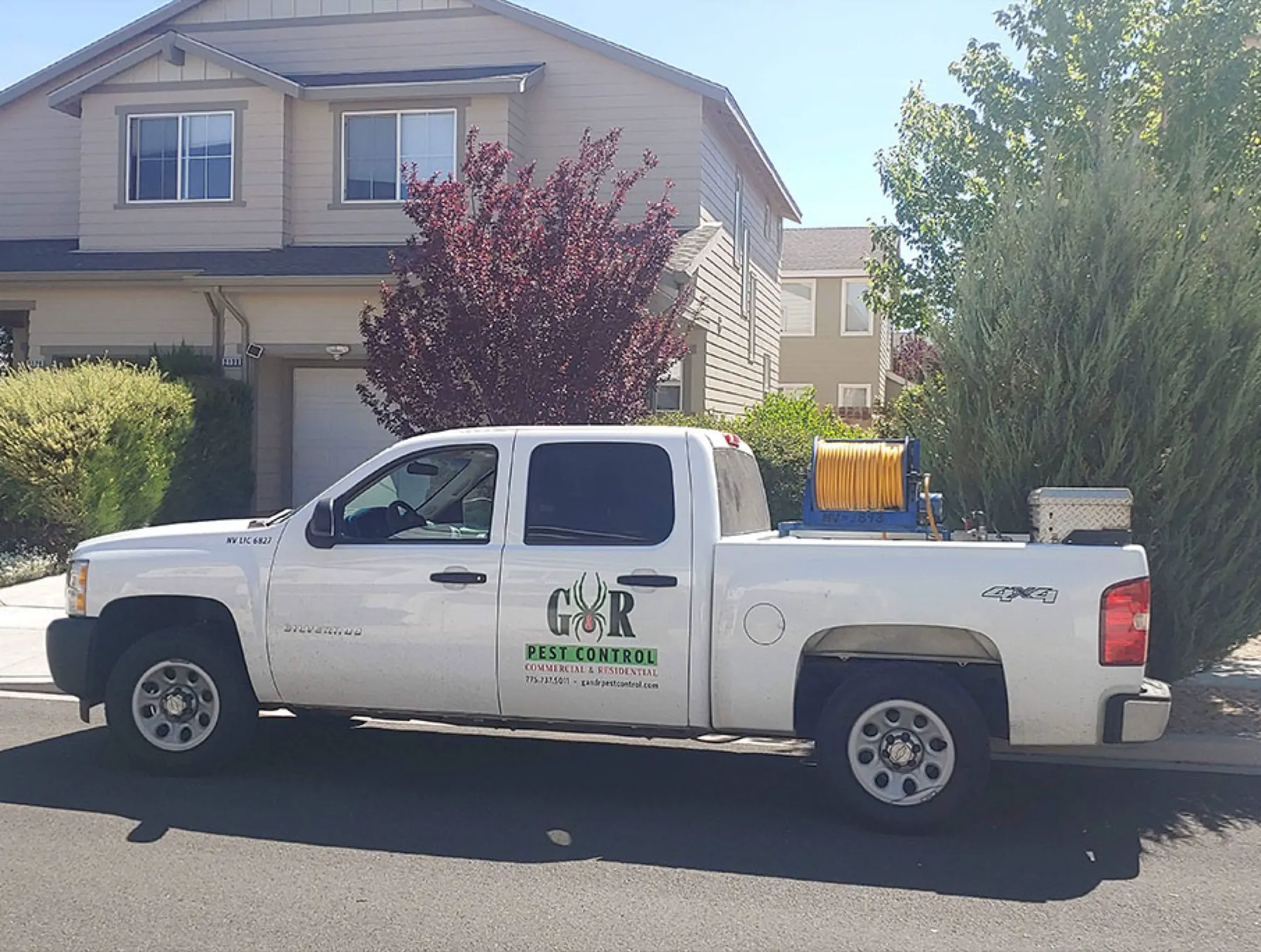
Fig. 01
The G&R truck outside a house
01Residential
Inside and outside the house, plus garages, attics, crawl spaces and yards. A complete inside-and-out treatment creates a better barrier than exterior-only service.
02Commercial
G&R serves commercial properties as well as homes. Call the office to talk through your building and schedule an inspection.
03Programs
One-time service with no contract, or a discounted custom program: monthly, bi-monthly or quarterly. G&R suggests a minimum of 3–4 visits a year.
Field guide10 plates
G&R's own list. Each plate says where the pest tends to show up around a property, marked on the same house, and what to tell the office.
 Plate 01 of 10
Box elder bugs live mainly in trees, then migrate to window sills and heavy leaf piles. Clearing leaves and debris away from the house helps keep them from gathering.
Where to look: Trees, window sills, leaf piles.
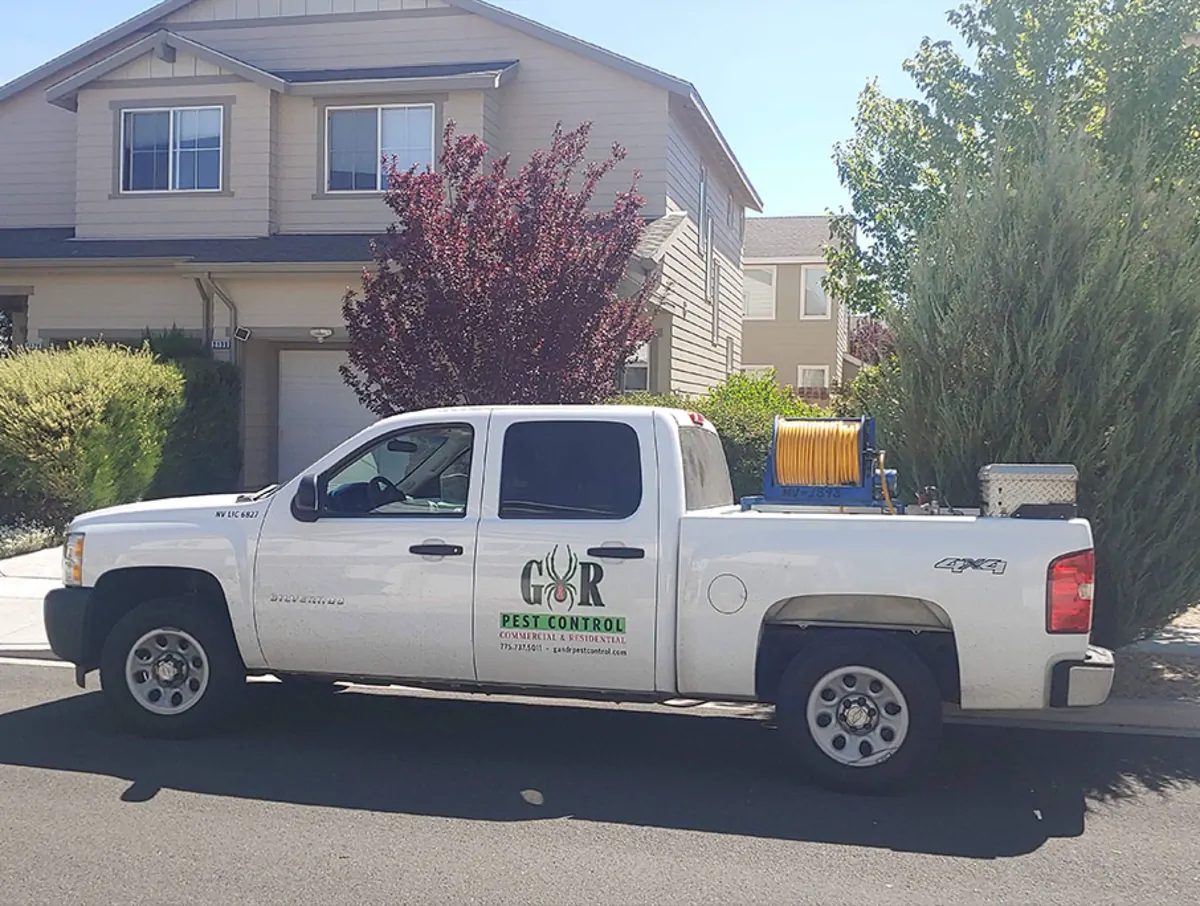
 Plate 02 of 10
Four kinds are common here: odorous (sugar) ants, carpenter ants, pavement ants and harvester ants. Odorous and pavement ants look for moisture. Carpenter ants use rotting wood to raise their larvae. Harvester ants build mounds and hunt for seed.
After treatment, ants can take 7–10 days to dissipate.
Where to look: Damp spots, rotting wood, mounds in the yard.
 Plate 03 of 10
Deer mice and field mice are the most common mice in the area. Desert rats, wood rats and pack rats move into attics, crawl spaces and garages. Mice stay active all year, including winter.
Rodent bait is kept in locked stations whenever possible. For garages, a door sweep can close the gap mice use to get in; read G&R's note on garage door sweeps.
Where to look: Attics, crawl spaces, garages.
 Plate 04 of 10
Scorpions are on G&R's list of common Northern Nevada pests. The species here are not the bark scorpions found around Las Vegas. Tell the office where and when you are seeing them.
What to tell the office: where you saw them and how often.
 Plate 05 of 10
Silverfish and springtails are found mainly in new construction, where they feed on building materials.
Where to look: Newly built homes and additions.
 Plate 06 of 10
Black widows, wolf spiders and other common spiders look for dark areas in houses and yards. Black widows are most noticeable in summer and fall. Spiders tend to clear quickly after treatment.
Where to look: Dark corners indoors, garages, yards.
 Plate 07 of 10
Earwigs head for gardens, where they feed on plants and shrubs.
Where to look: Garden beds, plants, shrubs.
 Plate 08 of 10
Crickets live outdoors. They are a nuisance rather than a threat to the house.
Where to look: Outdoors, around the yard.
 Plate 09 of 10
Millipedes gather in crawl spaces and other sub-areas looking for moisture. Dry air kills them.
Where to look: Crawl spaces and damp areas below the house.
 Plate 10 of 10
Wasps build nests in eaves. Yellow jackets usually nest in the ground. Hornets build nests about the size of a football. Don't confuse any of them with honey bees. Wasps tend to leave quickly after treatment.
Where to look: Eaves, the ground, trees.
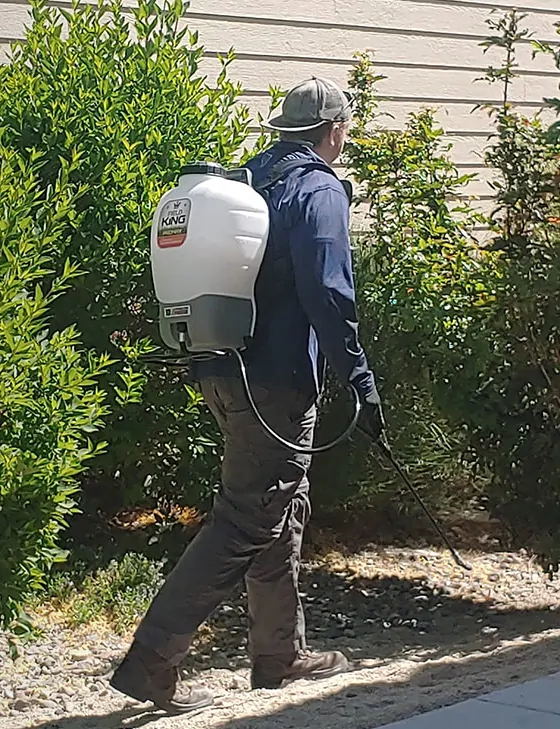
Your visitBefore and after
Pest service is control, not a promise of total elimination. The inspection is where you and G&R decide between one visit and a program.
FAQBefore you book
Answers from G&R's own FAQ. Anything else, ask the office when you call.
No. One-time service is available. Custom programs are offered at a discount.
Yes. All technicians are licensed with the Department of Agriculture.
Pest service is control, not total elimination. Spiders and wasps tend to clear quickly. Ants can take 7–10 days to dissipate.
A complete treatment, inside and outside, creates a better barrier to keep insects from getting into the building.
No. Book a day when gardeners, cleaners, painters and other trades won't be on site.
No. Wiping the product away makes the treatment ineffective.
It depends on the weather. Winter treatments are interior only because of snow and freezing conditions.
Yes. Pests overwinter rather than die off. Black widows are most noticeable in summer and fall, and mice are active all year.
Rodent bait goes in locked stations whenever possible.